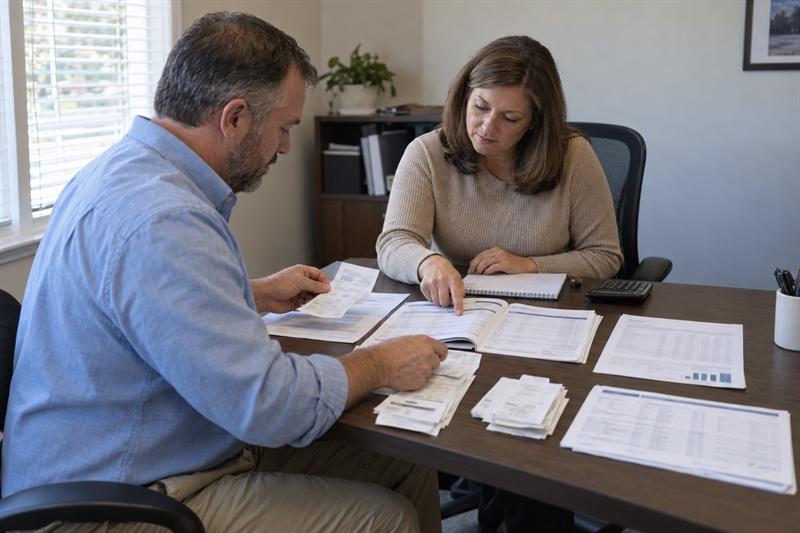

Quick Answer: If your records are behind, unclear, or taking too much of your time, bookkeeping support is often the practical first step. CPA support may become more important when you have complex tax, entity, reporting, or financial questions that go beyond maintaining day-to-day records.
Many small business owners compare a bookkeeper and a CPA when tax time becomes stressful, accounts have not been reconciled, or the business has outgrown an informal financial process. Speedy Tax Preparation & Bookkeeping Service helps Elizabethtown business owners start with the financial work that needs attention now.
A bookkeeper and a CPA can both be valuable, but they serve different functions. Current, organized books give a tax professional clearer information to work from. Without that foundation, tax preparation can turn into a search for missing documents, unclear expenses, and transactions that need further review.
The Short Answer: Do You Need a Bookkeeper or CPA?
A bookkeeper is often the practical first hire when day-to-day financial work is falling behind. A CPA may be more appropriate when the business faces complex tax treatment, ownership changes, entity questions, specialized reporting, or more involved accounting needs.
- Use a bookkeeper when: income, expenses, invoices, bank accounts, payroll records, or monthly reporting need consistent attention.
- Consider CPA support when: the business has a complex tax question, structural change, specialized reporting need, or more involved accounting issue.
- Consider both when: the business needs dependable monthly records and tax support based on those records.
The distinction matters because a tax return addresses a filing requirement. It does not create a process for recording next month’s income, reviewing expenses, reconciling accounts, or tracking payroll information. Without an ongoing process, many businesses fall behind again after tax season ends.
What Does a Bookkeeper Do for a Small Business?
A bookkeeper maintains the financial records a business uses to understand routine activity. The work commonly includes recording transactions, keeping accounts current, organizing supporting documents, and preparing information that is easier to review during the year and at tax time.
A business owner may have records in several places but no dependable monthly process. What starts as a few uncategorized transactions can grow into unreconciled accounts, missing expense details, and uncertainty about what the business earned or spent.
Keeping Income and Expenses Organized
Bookkeeping starts with recording business activity consistently. That includes categorizing income and expenses, maintaining supporting documentation, and separating business and personal spending where possible.
- Recording sales, payments, purchases, and operating expenses
- Organizing receipts and transaction details
- Categorizing expenses based on the business’s actual operations
- Maintaining records used for reporting and tax preparation
Generic categories do not solve every recordkeeping problem. A business needs categories that reflect how it earns money and where it spends it. When records are too broad, incomplete, or inconsistent, reports become less useful and tax preparation may require more cleanup.
Reconciling Accounts and Reviewing Financial Activity
Reconciliation compares transactions in the books with bank and credit-card statements. It helps identify entries that need review, including missing transactions, duplicate entries, bank charges, or payments recorded incorrectly.
Unreconciled accounts can create an inaccurate picture of the business. An owner may overestimate available cash, overlook an expense, or rely on reports that do not match actual account activity. This can become harder to correct after several months because the details are more difficult to remember and locate.
Supporting Payroll, Invoicing, and Organized Records
Bookkeeping can also support the financial routines around payroll, customer invoices, vendor bills, and regular reports. The exact scope varies by provider, but the purpose is to keep recurring financial work from piling up into a larger issue.
- Organizing payroll records and payroll-related information
- Tracking customer invoices and payments received
- Monitoring bills and vendor payments
- Preparing monthly reports such as a profit and loss statement or balance sheet
- Keeping documents organized for business tax preparation
Payroll adds another layer of responsibility because pay records, withholding, and reporting schedules need to stay organized. For a closer look at the process, see how payroll works for small businesses.
What Does a CPA Do?
A CPA is a licensed accounting professional. CPAs may provide tax, accounting, planning, reporting, and advisory services, but the work offered depends on the individual CPA or firm.
A CPA is not simply a more advanced title for a bookkeeper. The roles can overlap in some practices, but CPA credentials and service scope are different. The better question is whether the provider handles the type of work the business needs.
CPA Credentials and Professional Scope
CPA stands for Certified Public Accountant. Licensure is regulated at the state level, and CPAs work in different areas of accounting. Some focus on tax returns, while others focus on financial reporting, planning, business advisory work, or other accounting services.
A company seeking monthly transaction management needs a different service scope than a company dealing with a complicated ownership change or specialized reporting issue. Before hiring, it is important to understand what services a CPA actually provides rather than assuming all CPA practices offer the same work.
Complex Tax and Accounting Needs
CPA support can be especially useful when a business has questions beyond routine recordkeeping. Examples include complicated tax questions, multi-owner arrangements, entity changes, major purchases, financing requirements, or decisions that need deeper financial analysis.
For example, an LLC with straightforward business activity may mainly need reliable books and business tax preparation. A business changing its ownership structure, adding owners, or dealing with more complex tax treatment may need more specialized support. Entity type matters, but the complexity of the work helps determine the level of support.
Tax Preparation, Planning, and Representation Questions
Preparing a tax return is different from maintaining books throughout the year. Tax preparation uses the business’s records to complete a filing. Tax planning considers how future business decisions could affect taxes. Representation services depend on the professional’s credentials, authorization, and service scope.
Confusion can develop when a business owner expects a tax preparer to reconstruct incomplete books from a stack of statements while also answering every accounting and planning question. That approach can slow the work and leave the underlying recordkeeping issue unresolved.
Bookkeeper vs. CPA: Key Differences at a Glance
- Primary focus: A bookkeeper handles recurring financial records. A CPA may handle complex accounting, tax, reporting, and planning work.
- Typical timing: Bookkeeping is usually ongoing throughout the year. CPA services may be ongoing or centered on filings, planning, reporting, and major business events.
- Transaction support: Bookkeepers commonly record income, expenses, invoices, payments, and account activity. CPAs generally use financial information for accounting and tax-related work based on their service scope.
- Reconciliations: Regular account reconciliation is a core bookkeeping function. A CPA may review books but does not automatically provide monthly reconciliation services.
- Payroll support: A bookkeeper or payroll provider may help maintain payroll records and processing routines. CPA services vary by firm.
- Tax preparation: Tax preparation may be offered by a CPA, tax preparer, or bookkeeping provider with that service in scope. Organized books can make the process easier to manage.
- Best fit: Bookkeeping fits recurring financial organization. CPA support fits complex tax, accounting, reporting, or planning needs.
Neither role is automatically better. The right support depends on where the financial process is breaking down. For many small businesses, the first issue is not a lack of tax knowledge. It is a lack of current, reconciled records.
When a Bookkeeper May Be the Better First Hire
A bookkeeper is often the better first hire when the business needs a dependable system for recurring financial activity. If the records are incomplete, tax planning and tax preparation both begin with less reliable information.
- Your books are behind: Several months of uncategorized transactions usually means the business needs a cleanup process and a routine that helps prevent the backlog from returning.
- Your accounts are not reconciled: If bank and credit-card balances do not match the books, financial reports may not be ready to guide decisions.
- Tax time becomes a document search: Missing receipts, unclear expenses, and incomplete statements can lead to a rushed filing process and repeat the same problem next year.
- You do not know current revenue or expenses: This usually means the business is operating without timely financial visibility.
- Invoices, bills, or payroll records are slipping: Recurring administrative work needs a defined process before it creates larger cash-flow or reporting problems.
Many owners wait until filing season to deal with bookkeeping. By then, the work is no longer simply recording transactions. It can become reconstruction, review, and document gathering. The longer the gap, the more time may be spent figuring out what happened instead of using current information to run the business.
If your bank accounts have not been reconciled, your records are spread across receipts and statements, or you are repeatedly scrambling before tax deadlines, bookkeeping support may help establish a more consistent financial process.
- Transactions are being entered late or not at all
- Personal and business purchases are mixed together
- Monthly reports are unavailable or not trusted
- Tax documents cannot be gathered without searching through multiple accounts
These signs point to an ongoing bookkeeping need. Review when to hire a bookkeeper for your small business for a closer look at the point where managing the work alone begins to take too much time or create more confusion.
When CPA Support May Be Especially Important
CPA support can become more important when a business has questions beyond maintaining routine records. These situations may require a closer look at tax treatment, business structure, reporting requirements, or financial decisions with longer-term consequences.
- Changing from one business structure to another
- Adding or removing owners
- Handling more complex S corporation or C corporation tax-return needs
- Preparing financial information for a lender or major transaction
- Responding to a tax notice, audit matter, or specialized reporting request
- Managing business activity across more than one state
If you are dealing with one of these situations, routine bookkeeping alone may not answer the full question. The books still matter because they show the underlying financial activity, but the business may also need qualified tax or accounting support suited to the issue.
Why the Best Answer Is Sometimes Both
For many businesses, the strongest process includes reliable bookkeeping and tax support. The bookkeeper keeps financial activity current. The tax professional uses those records to prepare returns or address more complex tax needs.
- Step 1: Income, expenses, payments, and other transactions are recorded.
- Step 2: Bank and credit-card accounts are reconciled and reviewed.
- Step 3: Reports and tax documents are organized from current records.
- Step 4: Business tax preparation or higher-level accounting work proceeds with clearer information.
This handoff can make tax preparation more efficient because the records are more complete and easier to review. When books are current, the tax discussion can focus on the business’s actual situation instead of trying to identify unexplained transactions.
Speedy Tax Preparation & Bookkeeping Service provides monthly bookkeeping guidance for small businesses to help business owners keep routine financial work from becoming a year-end cleanup project.
A Practical Decision Checklist for Small Business Owners
Use this checklist to identify the support your business needs first.
- Are your books current and reconciled?
- Is the main issue transaction tracking, or is it a complex tax or entity question?
- Do you have payroll responsibilities that need regular records and reporting?
- Are you preparing for a tax filing, loan application, expansion, major purchase, or ownership change?
- Do you need monthly help, one-time tax preparation, or both?
- Do you need year-round access to someone who understands the business records?
If most answers point to overdue records, missing reports, or recurring administrative work, start with bookkeeping. If the central issue involves tax structure, complicated filings, ownership, or specialized reporting, CPA or qualified tax support may be more appropriate. If both problems are present, the business may benefit from coordinated bookkeeping and tax preparation rather than treating them as separate emergencies.
Questions to Ask Before Hiring a Bookkeeper or CPA
The service title does not tell you everything. Before hiring, understand exactly what the provider will handle and what remains the business owner’s responsibility.
- What tasks are included each month?
- How often are bank and credit-card accounts reconciled?
- Who will be the main point of contact?
- Which accounting system or software will be used?
- Are payroll, invoicing, accounts payable, or accounts receivable included?
- How will tax documents be organized and shared?
- Does the provider coordinate with a tax preparer or CPA when needed?
- How are deadlines, document requests, and pricing handled?
- Is support available outside the main tax filing period?
Clear responsibilities can prevent a common misunderstanding: assuming someone else is handling a task that no one agreed to manage. A business should know who records transactions, who reviews reports, who prepares payroll information, and who uses the finalized records for tax filing.
Bookkeeping and Business Tax Preparation in Elizabethtown, NC
Speedy Tax Preparation & Bookkeeping Service offers bookkeeping, payroll services, and business tax preparation for Elizabethtown small business owners. The process begins with the financial work that needs attention now, whether that means catching up records, building a monthly process, organizing payroll information, or preparing business tax documents.
Year-round bookkeeping support can be useful when questions arise outside tax season. Small business finances do not pause after a return is filed, and records maintained during the year can shape how prepared the business is for the next filing period.
Key Takeaways
- A bookkeeper generally maintains the organized, recurring financial records a small business needs throughout the year.
- A CPA is a licensed professional whose services may include complex tax, accounting, and financial work.
- The right choice depends on the immediate problem, not which title sounds more advanced.
- Unreconciled accounts and delayed recordkeeping can lead to unclear reports and stressful tax preparation.
- Many businesses benefit from both current books and qualified tax support working from those records.
Conclusion: Start With the Financial Work Your Business Needs Most
The real issue behind the bookkeeper vs. CPA question is usually not choosing between two titles. It is determining whether the business needs ongoing financial organization, more complex tax support, or a coordinated process that handles both.
When records are ignored, the backlog can grow, reports can become less reliable, payroll and invoice details may become harder to track, and tax preparation can turn into a last-minute reconstruction project. Speedy Tax Preparation & Bookkeeping Service is a practical option for Elizabethtown business owners who need to organize records, maintain a year-round bookkeeping process, and prepare for business taxes with clearer information.
Frequently Asked Questions About Bookkeepers and CPAs
Is a bookkeeper cheaper than a CPA?
Bookkeeping and CPA services are usually priced differently because they involve different kinds of work. Bookkeeping commonly covers recurring tasks such as recording transactions, reconciling accounts, tracking invoices, and organizing records. CPA work can involve more complex tax, reporting, planning, or accounting questions.
The useful comparison is not just the cost of one professional versus another. A business that needs monthly reconciliations and expense tracking should consider support that addresses those recurring issues. A business dealing with a complicated ownership or tax question needs a different level of service. Scope, transaction volume, payroll needs, and business complexity all affect cost.
Can a bookkeeper prepare business taxes?
A bookkeeper can organize the records needed for business tax preparation, but bookkeeping and preparing a business tax return are separate functions. The bookkeeper’s work supports tax preparation by keeping income, expenses, reconciliations, payroll details, and supporting documents organized.
Some bookkeeping providers also offer tax-preparation services, while others work with a separate tax professional. The key distinction is that clean books provide information used for filing. They are not the completed tax return itself.
Do I need a CPA for an LLC?
An LLC does not automatically require a CPA. The decision depends on how the LLC is taxed, how complex its activity is, whether it has payroll, how many owners it has, and whether the business is dealing with tax planning or structural questions.
A straightforward LLC may mainly need regular bookkeeping and business tax preparation. An LLC with multiple owners, changing ownership, significant transactions, or more involved tax treatment may need more specialized support. The business structure matters, but the complexity of the work helps determine the level of support.
When should a small business hire a bookkeeper?
A small business may be ready to hire a bookkeeper when financial tasks are no longer being completed consistently. Warning signs include unreconciled accounts, missing receipts, late transaction entries, unclear expenses, unpaid invoices, or an owner who cannot quickly see current revenue and spending.
Tax-time scrambling is another clear signal. If every filing period requires searching through statements and trying to remember old purchases, the business may need an ongoing recordkeeping process. The issue is no longer only a one-time cleanup task.
Can a bookkeeper and CPA work together?
Yes. A bookkeeper and CPA can work together when each role is clear. The bookkeeper maintains current financial records and reconciles accounts, while the CPA or tax professional uses that information for tax preparation, planning, or more complex accounting needs.
The important distinction is that bookkeeping and tax work are connected but not identical. Current records can make tax work more straightforward because the financial activity has already been recorded, reviewed, and organized.
What should I ask before hiring a bookkeeper or CPA?
Ask what tasks are included, how often accounts are reconciled, who will communicate with you, how documents are shared, and whether payroll, invoicing, or tax preparation is part of the service. These details help show whether the provider is addressing the actual problem or only handling part of it.
Also clarify responsibility boundaries. The business should know who is expected to provide records, who reviews transactions, who prepares reports, and who handles tax information. This can prevent the common problem of discovering too late that an important task was never included in the agreed scope.