
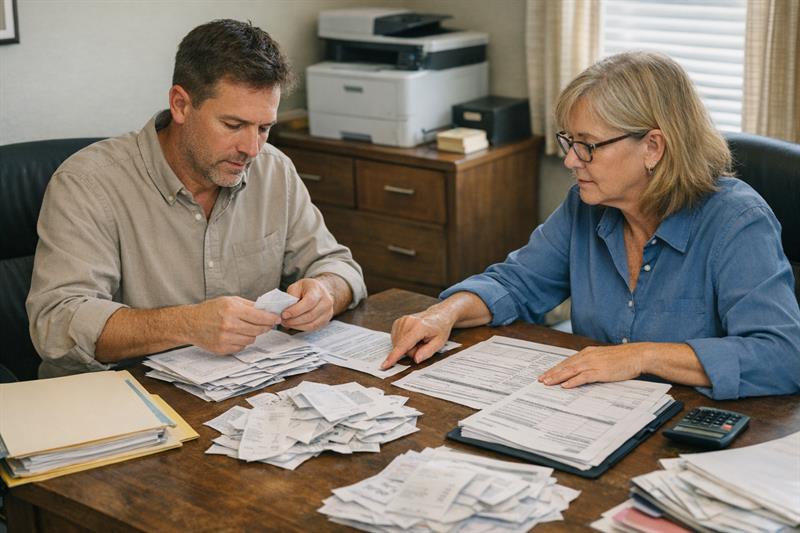
Quick Answer: Most tax filing problems start with missing or incomplete records. Keep income documents, deduction records, and supporting financial statements so your return is accurate and your numbers can be backed up if questions come up later.
This comes up every year. People sit down to file and realize key documents are missing or certain expenses were never tracked. That slows the process down and can limit what can be claimed.
At Speedy Tax Preparation & Bookkeeping Service, one of the biggest issues is last-minute record gathering. Documents are scattered, details are incomplete, and filing becomes harder than it needs to be.
Why Keeping Tax Records Matters
Accurate records are what make a tax return reliable. Without them, numbers get estimated, details get missed, and the return becomes harder to support.
This usually shows up in a few ways. Income gets left out because smaller payments were not tracked. Deductions are missed because there is no documentation. Filing takes longer because records have to be rebuilt instead of simply reviewed.
Waiting until tax season to organize everything is one of the main reasons filing becomes more difficult. By then, documents are harder to find and details are easier to forget. When records are incomplete, the return often takes more time and may need follow-up.
If you want a smoother process, it helps to understand what to expect from a local tax office and how organized records support that process from the start.
Complete Tax Records Checklist for Individuals
- Income documents
- Deduction and credit records
- Investment and property records
Income Documents
- W-2 forms from employers
- 1099 forms for freelance, contract, or interest income
- Unemployment income records
- Retirement or Social Security income statements
This is where gaps often begin. Smaller 1099s or side income can be easy to overlook. When income is missing, the return no longer reflects the full picture and may need corrections later.
Deduction & Credit Records
- Medical expense receipts
- Education-related expenses
- Childcare payment records
- Charitable donation records
- Mortgage interest statements
Deductions depend on documentation. When receipts are missing, those expenses are harder to support. That can lead to lower deductions or extra time spent trying to reconstruct records.
Investment & Property Records
- Brokerage and investment statements
- Property purchase and sale documents
- Capital gains and loss records
These records usually involve more detail than standard income documents. When information is incomplete, the numbers become harder to verify and filing can take longer.
Complete Tax Records Checklist for Small Businesses
- Income and sales records
- Expense documentation
- Payroll records
- Business asset tracking
Income & Sales Records
- Invoices issued to clients
- Sales receipts
- Bank deposit records
Business income should line up across your records. When invoices, deposits, and reported totals do not match, filing becomes more complicated and the numbers need closer review.
Expense Documentation
- Receipts for supplies and purchases
- Utility and operating expense records
- Mileage logs for business travel
This is where many businesses miss deductions. Expenses may be partially tracked or not categorized clearly, which makes it harder to capture the full cost of running the business.
Payroll & Employee Records
- Payroll reports
- Employee tax forms
- Contractor payment records
Payroll records affect more than one filing area. When classifications or records are off, the issue can carry through payroll reporting and year-end tax work. For a closer look at how this connects, see what payroll services include and why they matter.
Business Asset Records
- Equipment and asset purchases
- Depreciation tracking
- Asset sale documentation
These records are often overlooked until they are needed. By then, details can be harder to recover, which slows down filing and can affect how assets are reported.
How Long Should You Keep Tax Records?
- Keep most tax records for several years after filing
- Keep records longer if they relate to assets or ongoing financial activity
- Retain documents tied to property or investments for extended periods
Many people either keep everything or throw out too much. Both approaches create problems. Too little documentation leaves gaps. Too much without organization makes it harder to find what matters when you need it.
Best Practices for Organizing Tax Documents
- Separate records by year
- Group documents by category
- Use a consistent digital or paper system
- Update records throughout the year
Organization works best when it is consistent. Waiting until the end of the year usually means details are missing. Keeping records updated throughout the year makes everything easier to manage and review.
For many businesses, there comes a point when simple systems stop keeping up. That is often when it makes sense to consider outsourced bookkeeping services to keep records accurate and current.
When to Get Professional Help
There is a point where handling everything yourself starts to create more delay than progress.
You may be at that point if any of these sound familiar:
- Multiple income sources that are difficult to track clearly
- Missing or incomplete records
- Business expenses that are not well documented
- Too much time spent organizing records close to filing deadlines
When that happens, the issue is usually not just paperwork. It is the lack of a system. Trying to sort everything out at once can create more confusion and make filing harder.
Getting support at this stage is less about convenience and more about creating an organized process that keeps your return accurate and manageable.
Key Takeaways
- Keep all income records, including smaller or irregular sources
- Maintain receipts and documentation for deductions and expenses
- Organize records throughout the year, not just during tax season
- Use consistent retention practices to avoid gaps or clutter
- Get help when records become difficult to manage accurately
Conclusion
The main problem is not just missing paperwork. It is the pattern of disorganization that builds over time. Once records are incomplete, filing becomes slower, less accurate, and harder to manage.
That can lead to missed deductions, repeated corrections, and more time spent fixing problems instead of finishing the return. Without a better system, the same issues often carry into the next year.
Speedy Tax Preparation & Bookkeeping Service works with individuals and small business owners to organize records, prepare tax returns, and keep financial paperwork on track throughout the year.
If your records are incomplete or difficult to manage, the next step is to put a clear system in place now. That makes filing simpler, faster, and less stressful.
Frequently Asked Questions
What records do I need to keep for taxes?
You should keep income documents, deduction records, and supporting financial statements. This includes W-2s, 1099s, receipts, and bank records. Keeping them organized makes filing easier and helps support the numbers on your return.
How long should I keep tax documents?
Most tax records are kept for several years, depending on the situation. Records tied to assets or long-term financial activity are often kept longer. Organizing them by year makes them easier to store and find.
Do I need to keep receipts for taxes?
Yes, receipts help support deductions and business expenses. Without them, those amounts can be harder to document. Keeping receipts consistently makes tax filing easier.
What happens if I don’t have all my tax records?
Missing records can slow down filing and make the return less complete. In some cases, records may need to be reconstructed before the return is finalized. Getting help can make that process easier to manage.
What records should small business owners keep for taxes?
Business owners should keep income records, expense documentation, payroll records, and asset tracking. These documents support reporting and deductions. A consistent system helps keep everything organized and aligned.
Can I store tax records digitally instead of paper?
Yes, digital storage is a common way to keep tax records organized. Scanned receipts and electronic files are easier to sort and retrieve. The key is using a system you can maintain consistently.