
When you prepare your business tax return, the records you bring in from payroll and contractor payments both end up on the same form, but they take different paths. Clean contractor 1099 records for business tax return reporting comes down to one question: can each payment be traced back through the bookkeeping and into the right place on the return? The IRS doesn’t care what you call the payment in your software; it cares whether the money was withheld and taxed as payroll or left as a contractor payment. That distinction changes where the deduction appears and what supporting documents are needed. The practical goal is simpler than it sounds: every total on the return should match a record behind it.
Two Kinds of Worker Records, Two Paths Into the Return
Both kinds of payment are deductible, but they reach the return through different paperwork. Employee pay rests on a payroll record that has already been filed with the IRS in pieces through the year, so the return is confirming numbers the agency has seen before. Contractor pay rests on a payment listing and the 1099-NEC forms issued from it, which is a record the business builds itself. One path arrives as a filed total and the other has to be assembled, and both have to survive a look at the source.
The two paths also close at different times. W-2 and 1099 forms are prepared in January, so by the time a return is worked on, the forms already exist and the return has to agree with them rather than the other way round. That is why a correction made in February is usually a correction to a form and to the books at the same time.
How Employee Payroll Reaches the Business Return
Every employee payment you make is tracked through your payroll system. When you pay an employee, the employer withholds income tax and the employee share of Social Security and Medicare taxes. You also pay the employer share of those taxes. At the end of the year, a W-2 form is issued to each employee, reporting their wages and the amount withheld. These totals are pulled from your payroll register and annual summary, which must align with the quarterly payroll return totals. This alignment is what keeps the numbers on the business return tied to what was actually reported through the year. Where the withholding and deposits are handled outside the business, payroll processing for small businesses keeps those filings moving on a schedule, and the annual totals still come back to the books for review.
The monthly payroll-to-bookkeeping tie-out is where those three totals either hold together or drift apart. Each month, the payroll figures get recorded in the books, so the year-end review has something to measure against instead of a fresh pile of reports. A payroll service that withholds, deposits and files on schedule still leaves the posting to the books, and the two halves meet at the bank statement: net pay, withholding and the employer share should each match an entry there.
How Contractor 1099 Records Feed the Return
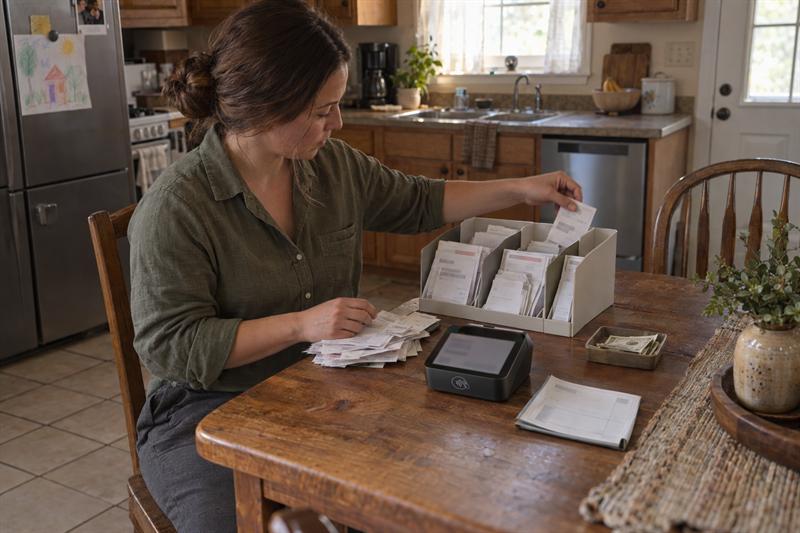
Contractor 1099 records for business tax return reporting starts with payments made to people who are not employees. A nonemployee paid $600 or more in a year for services generally falls under 1099-NEC reporting, with one copy going to the recipient and one going to the IRS. That makes each payment something to track, with the name, the amount and the tax identification number behind it, because the form that goes out in January is built from those entries.
Unlike payroll, contractor payments do not involve withholding taxes or employer payroll taxes. That means the total of all 1099-NEC forms issued by your business is not the same as the total of wages reported on W-2s, even if the dollar amounts look similar. You also need to consider the entity type of the person you paid. If they’re a corporation, they may not need a 1099-NEC unless specific exceptions apply. This makes it important to keep detailed records for each contractor payment, including the original agreement and the payment method used.
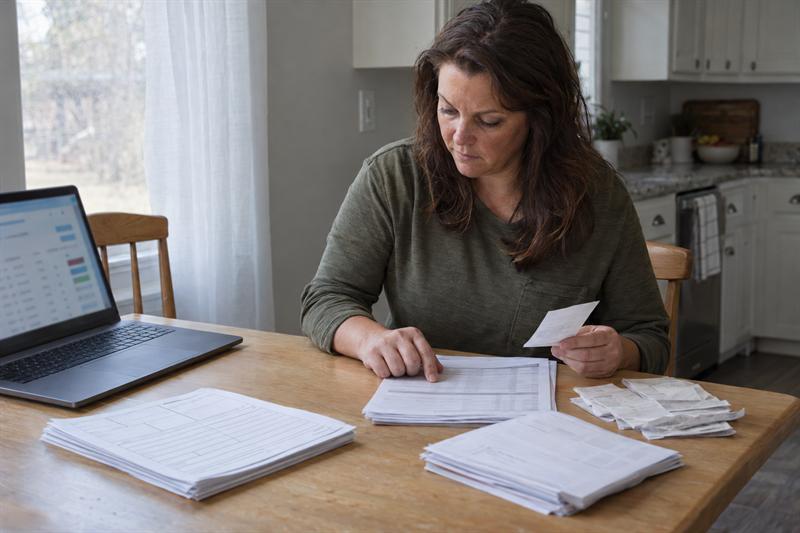
Grouping the payments by contractor, then matching each group back to the bank, is the step that surfaces a discrepancy while there is still time to fix it. The same approach underlies organizing 1099 records by payer and payment when a business faces a stack of forms at filing time.
Where the Two Sets of Records Have to Agree
Your payroll and contractor records must agree with each other and with your bookkeeping entries. If a contractor total doesn’t match the expense ledger, or if a 1099-K from a payment card company doesn’t align with your deposits, that’s a red flag. The IRS expects these numbers to be consistent because they’re tied to actual payments made during the year. A mismatch isn’t necessarily an error, but it does require a closer look at the source documents.
Similarly, if a worker’s payment pattern looks like regular payroll—such as weekly or biweekly payments—it may indicate that they should have been classified as an employee instead of a contractor. Changing their classification can move the deduction from one line to another and may affect whether payroll taxes were due. When records don’t match, you need to go back to the original bank statement and the agreement you had with the worker to determine which number is correct. That is where the return gets settled against the work itself rather than against the label on the payment.
A payment pattern is one signal, and not the deciding one. How much control the business holds over the work carries more weight, which is why worker classification and its payroll tax effects approaches the question as a records problem rather than a labeling one.
What the Entity Type Changes About These Records
The entity type of the business owner or the payee affects where income and expenses appear on the return. If you’re a sole proprietor or own a single-member LLC, your business income and expenses are reported on Schedule C attached to your individual tax return. In contrast, an S corporation reports shareholder-employee wages through payroll, which appear as W-2 wages. A partnership, on the other hand, reports each owner’s share of income and expenses on a K-1 form.
Where the entity type matters most is in keeping the two streams apart. In an S corporation, shareholder-employee pay runs through payroll and lands as W-2 wages on the return the entity files, while contractor payments stay on the expense side with their own listing behind them. Mixing the two is the error that leaves a wage total nobody can reconstruct later.
Which return gets filed, and which of these records it asks for, follows from the entity type, and S corporation and LLC tax return preparation sets out that split.
The Year-End Package to Hand a Preparer
A preparer can only check what is in front of them. The records below are the ones that let a return be built from source documents instead of from memory, and having them in one place cuts down on the questions that come back later.
Here’s what you should include in your year-end package:
- The payroll register and annual payroll summary
- Copies of all W-2 forms issued to employees
- The quarterly payroll return totals
- A complete list of contractor payments with names, amounts, and tax identification numbers
- Copies of all 1099 forms issued and received
- The bookkeeping reports for the entire year
Each item on that list can be checked against the one beside it, which is what turns the package into a review. Where the reports themselves are the missing piece, small business bookkeeping that produces those reports is the part that has to be built during the year rather than in February.
Key Takeaways
The return is built from two record sets that reach it by different routes, and most of the work is in keeping them apart until each one has been checked. Bookkeeping, payroll and tax questions stay open year-round at the Elizabethtown office, including the months when no return is being filed.
- Contractor 1099 records for business tax return reporting rests on payments that can be traced to a name and an amount.
- Employee payments go through payroll and require W-2 forms and matching totals.
- Contractor payments are reported via 1099-NEC forms and must be traced back to individual payments.
- The office provides year-round support for small businesses in Elizabethtown and nearby communities.
Conclusion
Speedy Tax Preparation & Bookkeeping Service, located at 107 N Poplar Street, Elizabethtown, NC 28337, helps individuals, families, and small businesses in the area with tax preparation, bookkeeping, payroll, and notary services. The office has been serving the community since 1999, offering practical, local guidance without the pressure of a high-volume chain. When your records are built accurately throughout the year, your return becomes a review rather than a reconstruction, making the process smoother and more reliable. If you need help organizing your records or preparing your return, you can reach out through the office contact page.